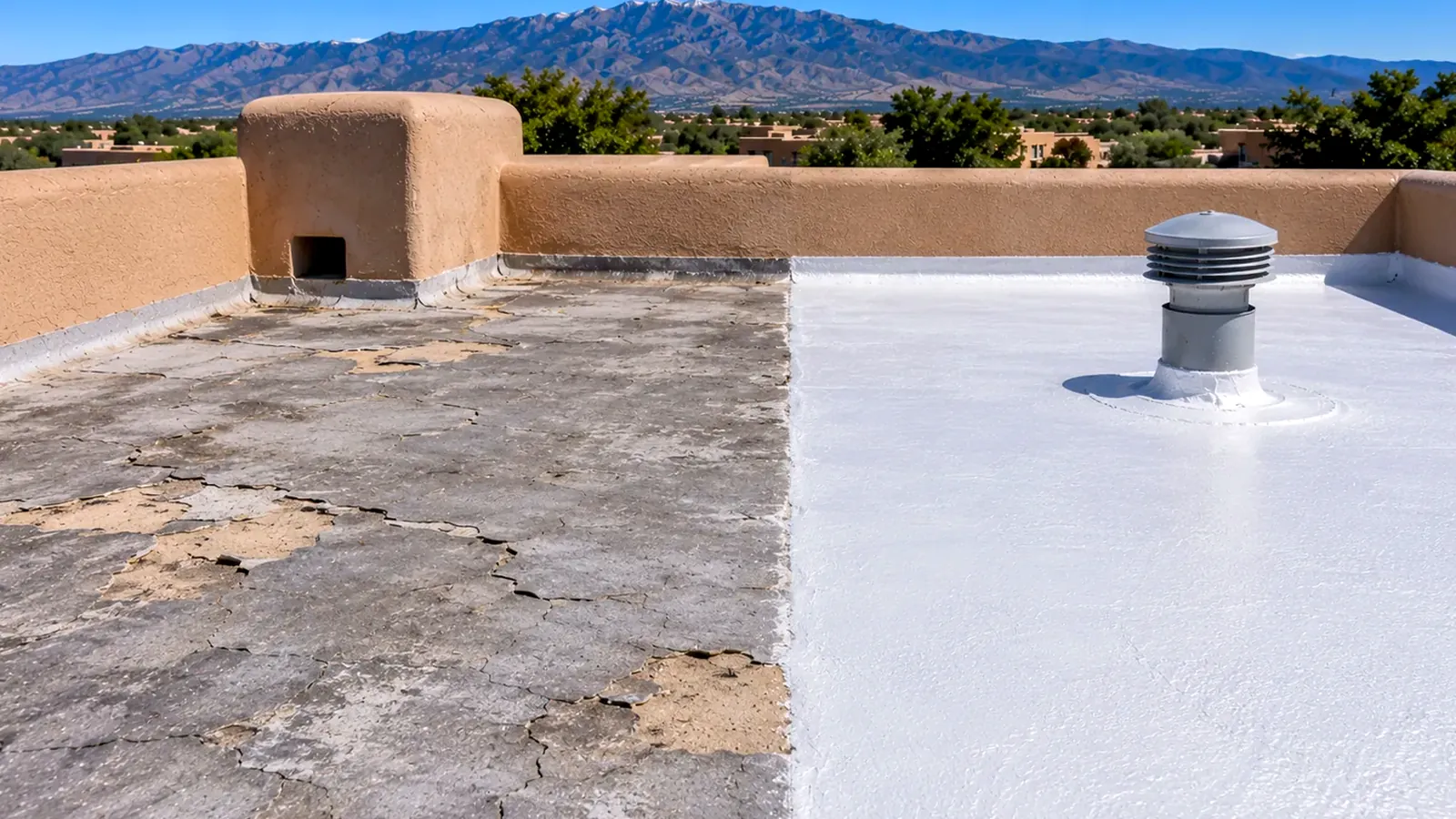
When a recoat makes sense
Recoating works on roofs where the material underneath (usually foam) is still dry and firm. It replaces the worn protective layer and seals the details. It isn't a fix for a wet roof, and it won't stop a leak whose source hasn't been repaired.
Our recoat process
- Inspect the whole roof, moisture-check suspect areas and note every opening and corner.
- Pressure-wash dirt, chalk and loose coating.
- Repair: cut out wet or damaged foam, fill low spots, reseal canales and parapet corners.
- Detail vents, skylights, cooler stands and pipe boots.
- Coat at the specified thickness, usually two coats, with extra at edges and corners.
- Clean up and walk you through photos.
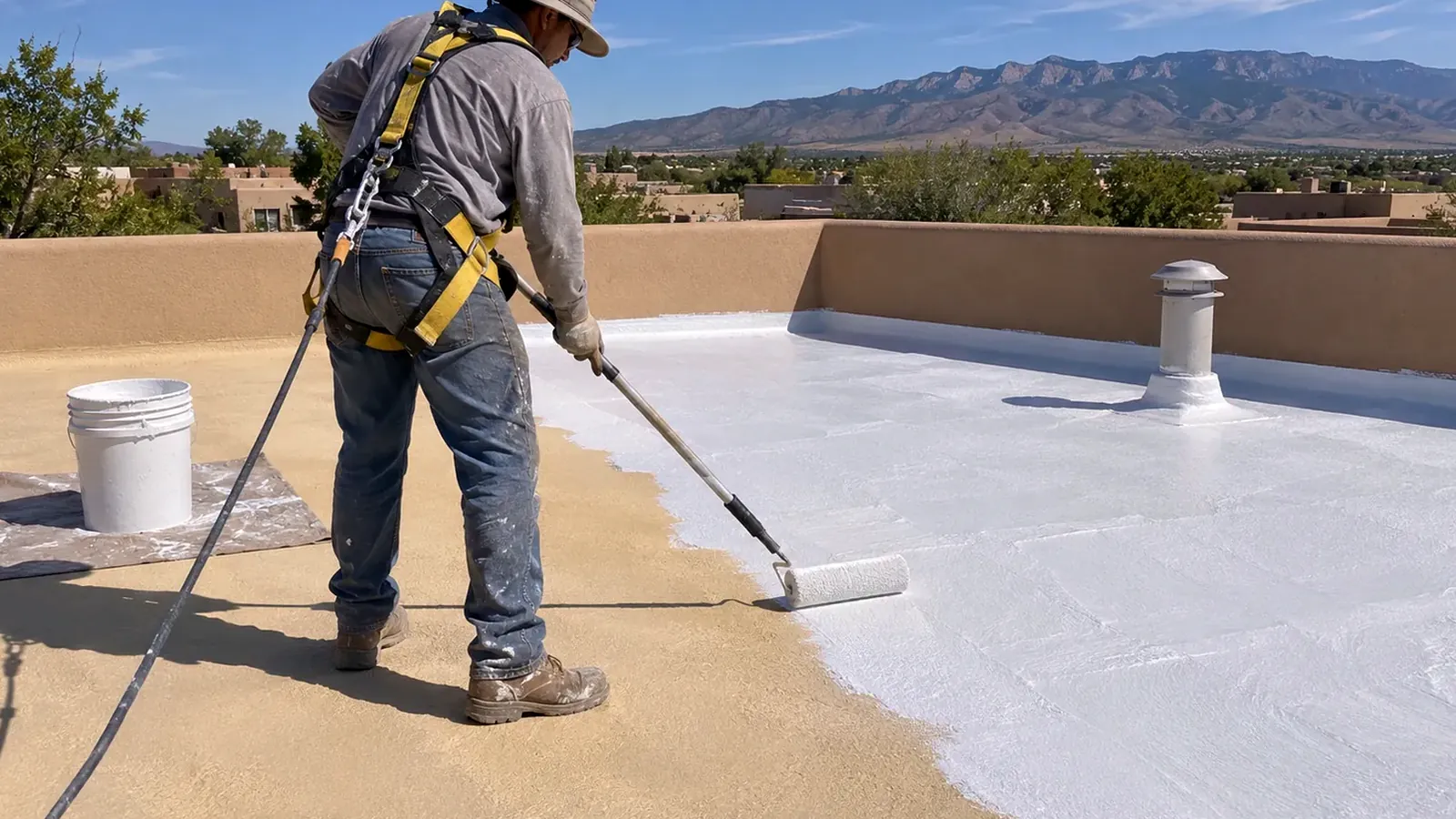
Elastomeric or silicone
Acrylic elastomeric
The common bright-white choice. Good value and very reflective. Best on roofs that drain well.
Silicone
Better where water ponds, and very UV-stable. Costs more and needs silicone for future recoats.
Cost
Recoating sound foam commonly runs about $2 to $4 per square foot, depending on repairs, coating and access.
Call us for a free look at your roof. You get photos of what we find and written pricing before any work starts.
Common questions
How often should a flat roof be recoated?
Roughly every 5 to 10 years here, depending on the coating, thickness, drainage and sun exposure.
Can you recoat over tar and gravel?
Not directly. The gravel must be removed and the surface prepared, and often new foam or a membrane is the better choice.
What time of year is best?
Warm, dry, calm days. Late spring and early fall are ideal; before monsoon season fills up fast.