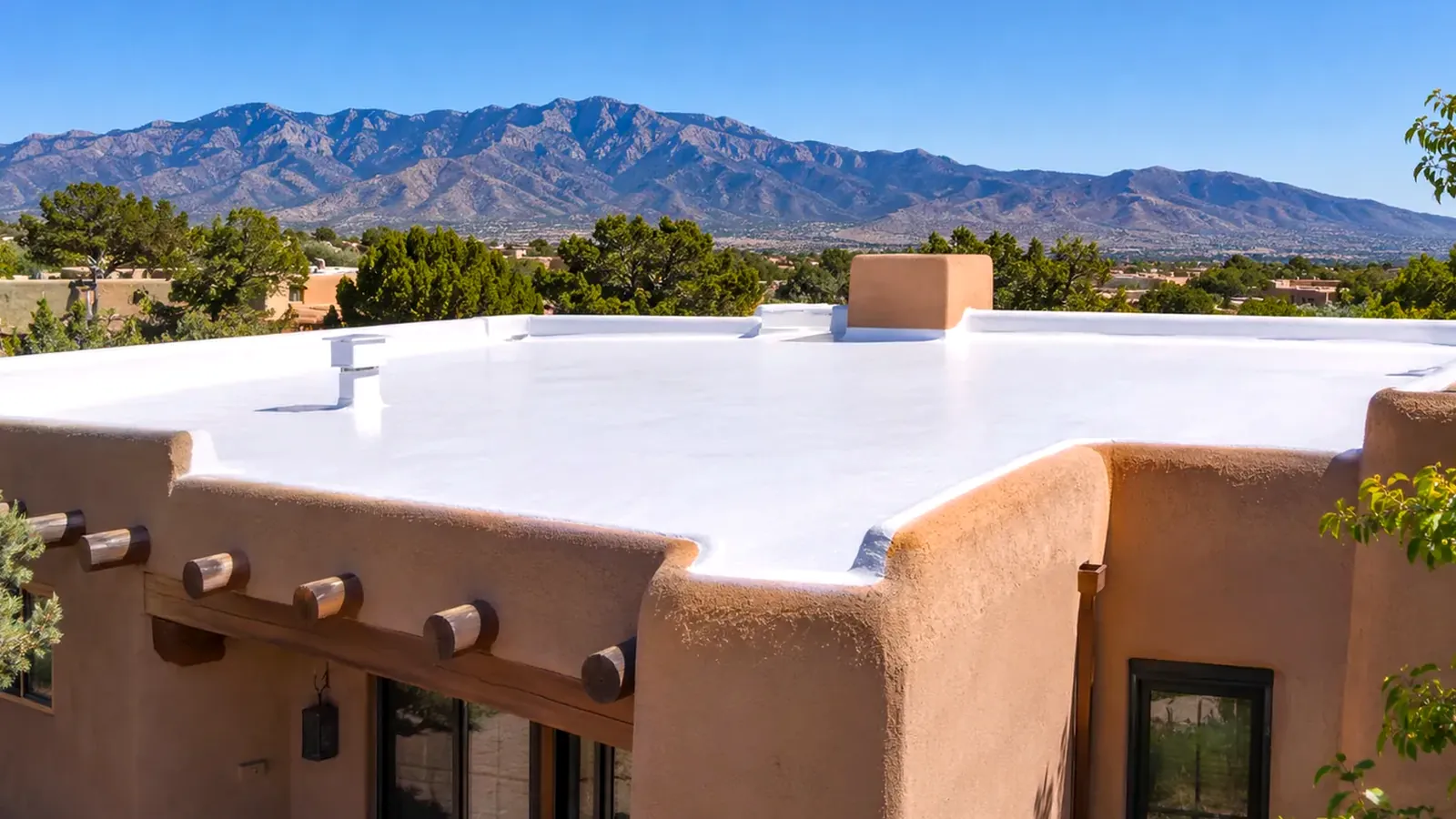
How parapets leak
A parapet is exposed on three sides: the top, the outside face and the inside face toward the roof. Sun, wind, freeze-thaw nights and monsoon rain hit all of them. When any part cracks, water gets into the wall and runs down inside, often coming out on a ceiling or wall well away from where it entered.
- The cap. The top of the wall is flat or slightly rounded. Hairline cracks, a failed coating or loose metal coping let water straight down into the wall.
- The inside face. Where the roof surface turns up the wall, the termination can crack or peel away.
- The roof-to-wall corner. The wall and roof move differently. A sharp corner cracks; a proper rounded cant doesn't.
- Stucco cracks on the outside face, especially at corners and around canales.
See why flat roofs leak at parapets.
Our parapet repairs
- Seal and coat parapet caps, or add metal coping where it makes sense
- Rebuild the roof-to-wall cant so it flexes instead of cracking
- Carry the roof coating or membrane up and over the inside face
- Patch stucco cracks around canales and corners
- Check for wet framing or adobe and repair before sealing it in
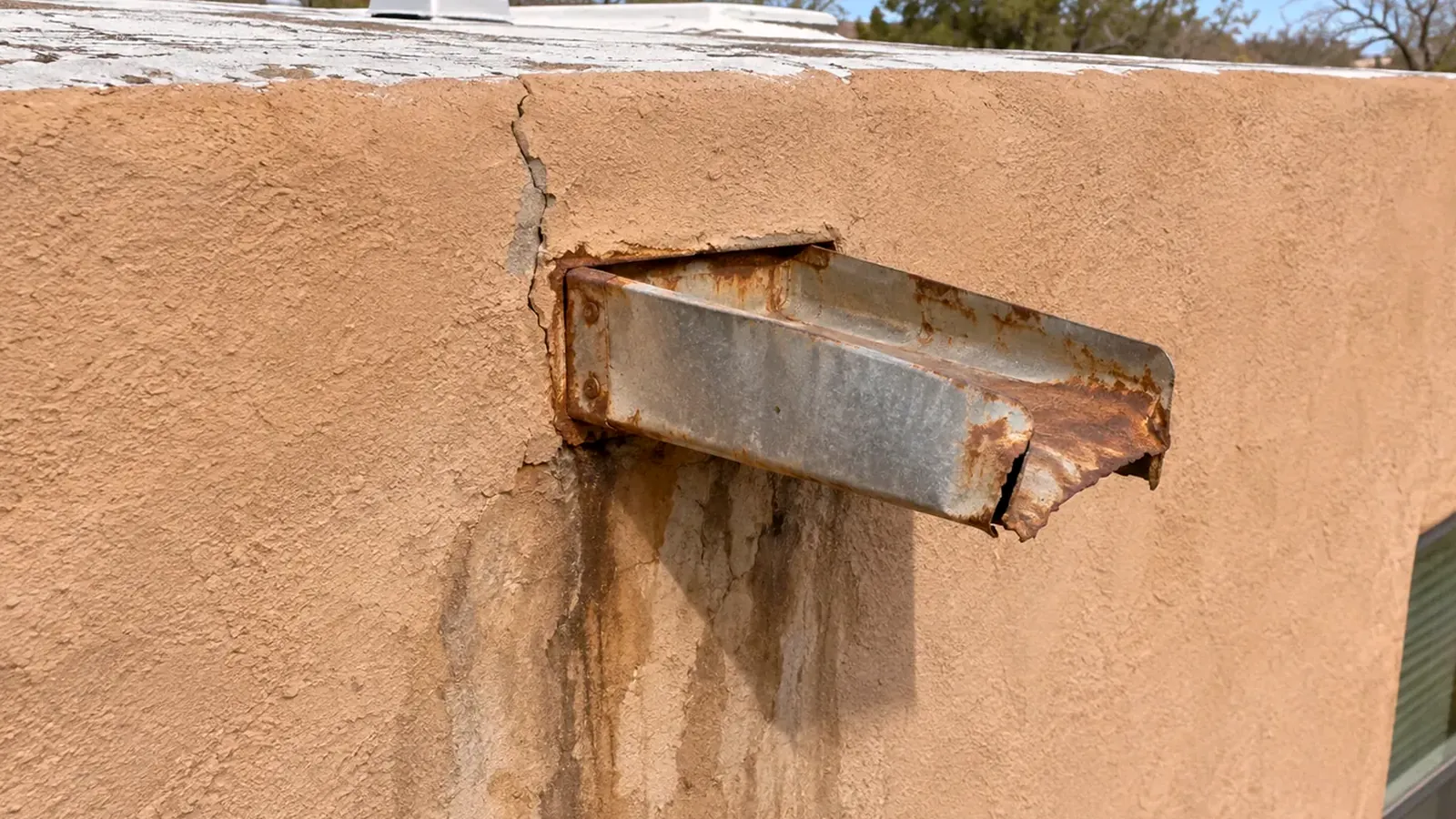
Roofing and stucco together
Parapet leaks sit right between two trades. A roofer who ignores the stucco, or a stucco crew that ignores the roof, leaves the leak in place. We look at both and make sure the repair covers the whole path water is taking.
Call us for a free look at your roof. You get photos of what we find and written pricing before any work starts.
Common questions
Do parapets need to be coated?
The inside face and the cap should be protected, usually by carrying the roof coating or membrane up and over, or with metal coping.
Can you match my stucco color?
For small patches, color can be matched closely. Large areas may need the wall recoated for an even finish.
Is a cracked parapet a structural problem?
Usually not, but long-term water in the wall can damage framing or adobe. That's why it's worth fixing early.