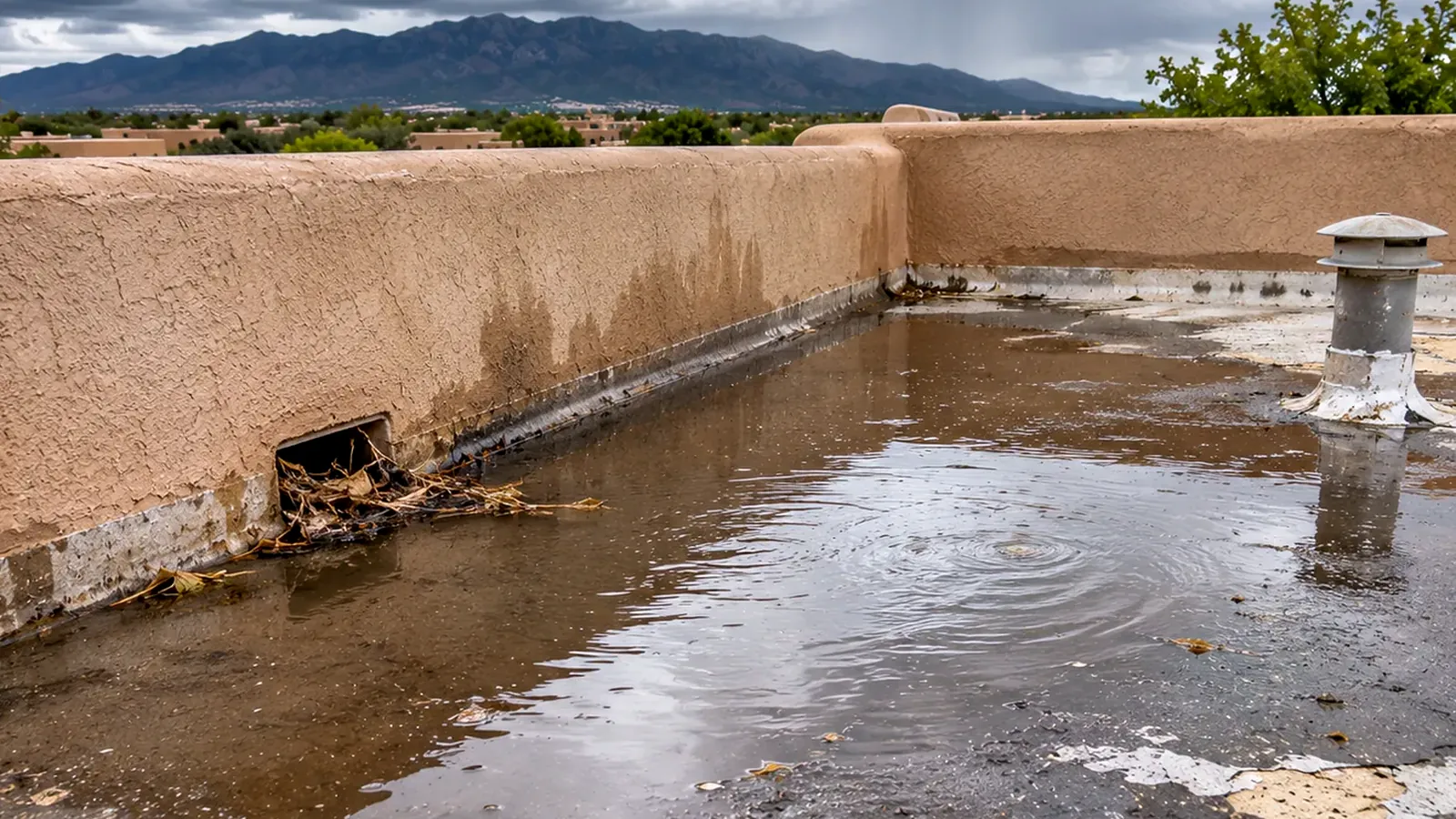
Why ponding matters
Standing water breaks down coatings, softens asphalt, collects dirt that holds even more water, and finds every pinhole. A roof that ponds wears out years earlier than one that drains. In monsoon season, a large pond can also add serious weight to the roof.
Causes
- Roofs built nearly dead flat, or settled over time
- Canales set too high, or roofing built up around them
- Clogged canales, scuppers or interior drains
- Sagging decking or joists, sometimes from long-term leaks
- Too few drains for the roof area
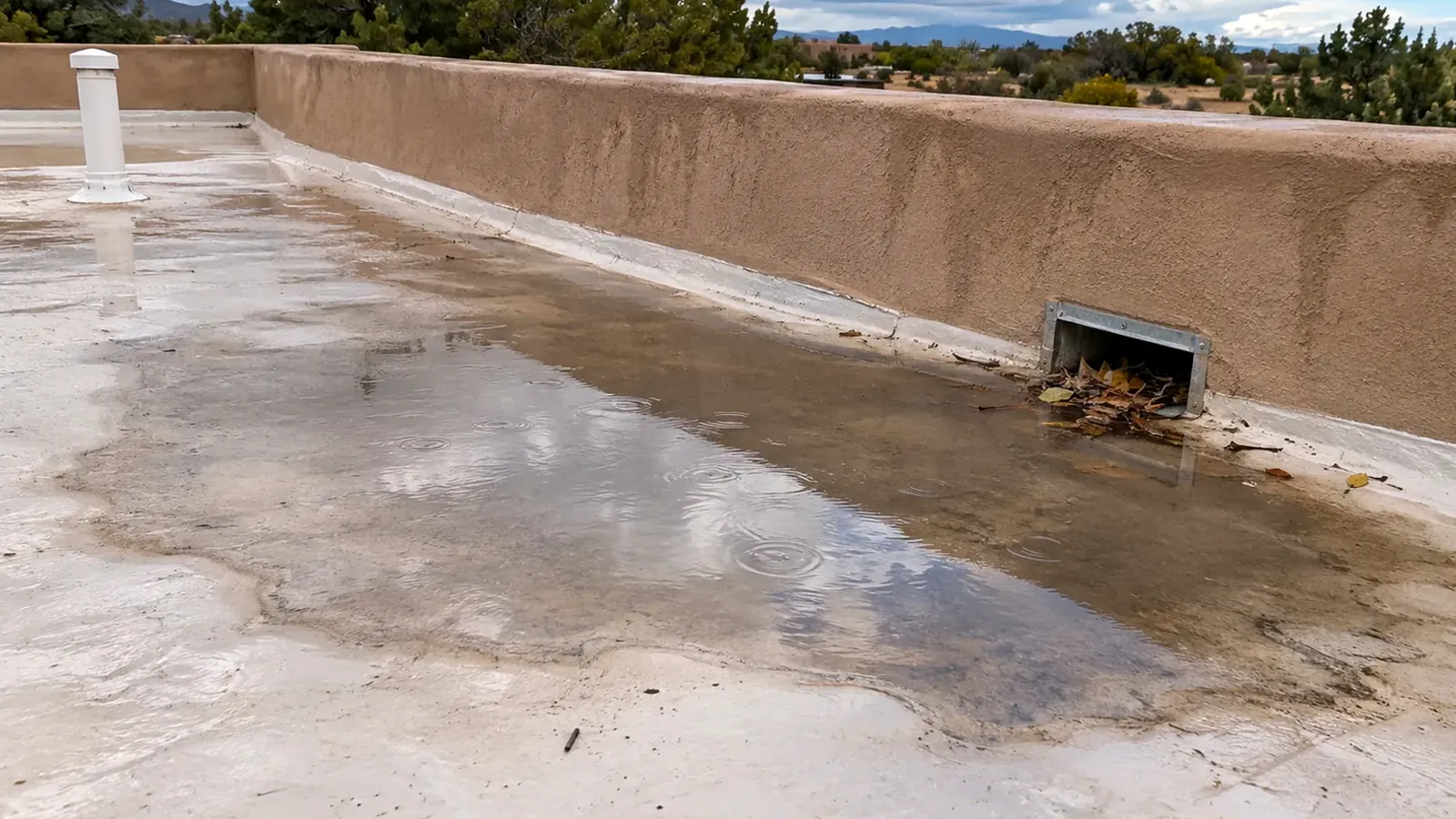
Fixes
- Clear and reset canales and drains so they sit at the low point.
- Build up low areas with foam or tapered insulation to create slope.
- Add crickets (small ridges) to steer water around obstacles toward drains.
- Add a canale or scupper where water has no good way out.
- Repair any structural sag before building up the roof.
If the roof ponds and the surface is worn anyway, fixing slope during a recoat or replacement is the most cost-effective time to do it.
Call us for a free look at your roof. You get photos of what we find and written pricing before any work starts.
Common questions
How much ponding is too much?
Many roofing guidelines treat water still standing about 48 hours after rain as ponding that needs attention.
Can silicone coating help?
Silicone handles ponding better than acrylic, but fixing the slope is the real solution where possible.
Is a sagging roof dangerous?
It can be. A noticeable sag should be looked at promptly, especially before monsoon season.