How foam roofs fail
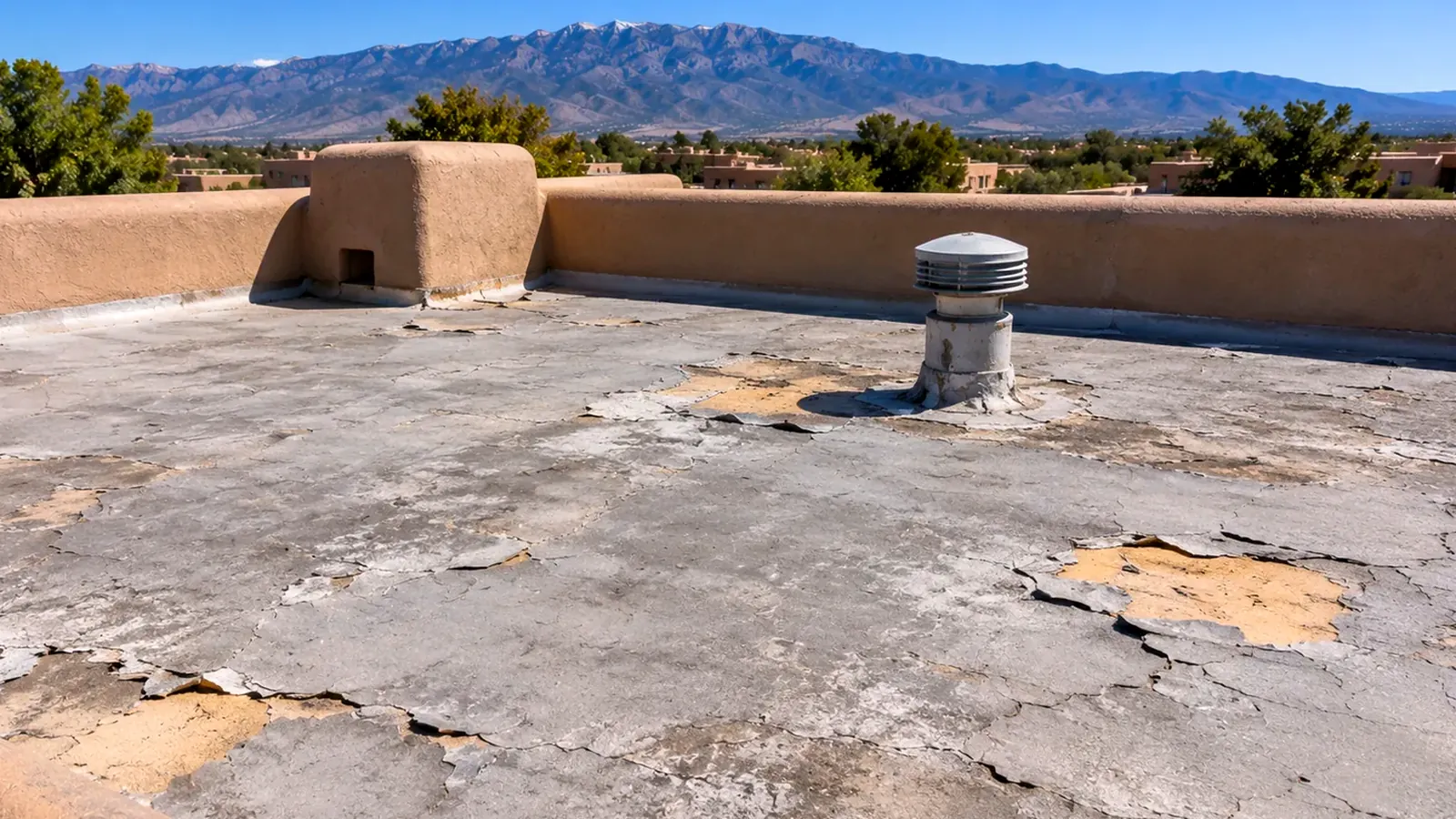
Spray polyurethane foam is seamless, insulates well and can be shaped to drain. But foam breaks down in sunlight, and it relies completely on the coating over it. When the coating wears through, the foam turns orange-brown, gets crusty and starts to erode. Water then finds its way into the foam and, eventually, the house.
- Gray or chalky coating, then tan foam showing through
- Blisters and peeling coating
- Pecks and holes from birds, and punctures from foot traffic or dropped tools
- Cracks at parapet corners, vents and cooler stands
- Soft, wet foam around a leak
Repair options
- Spot repair: cut out damaged or wet foam, fill with new foam, then seal and coat.
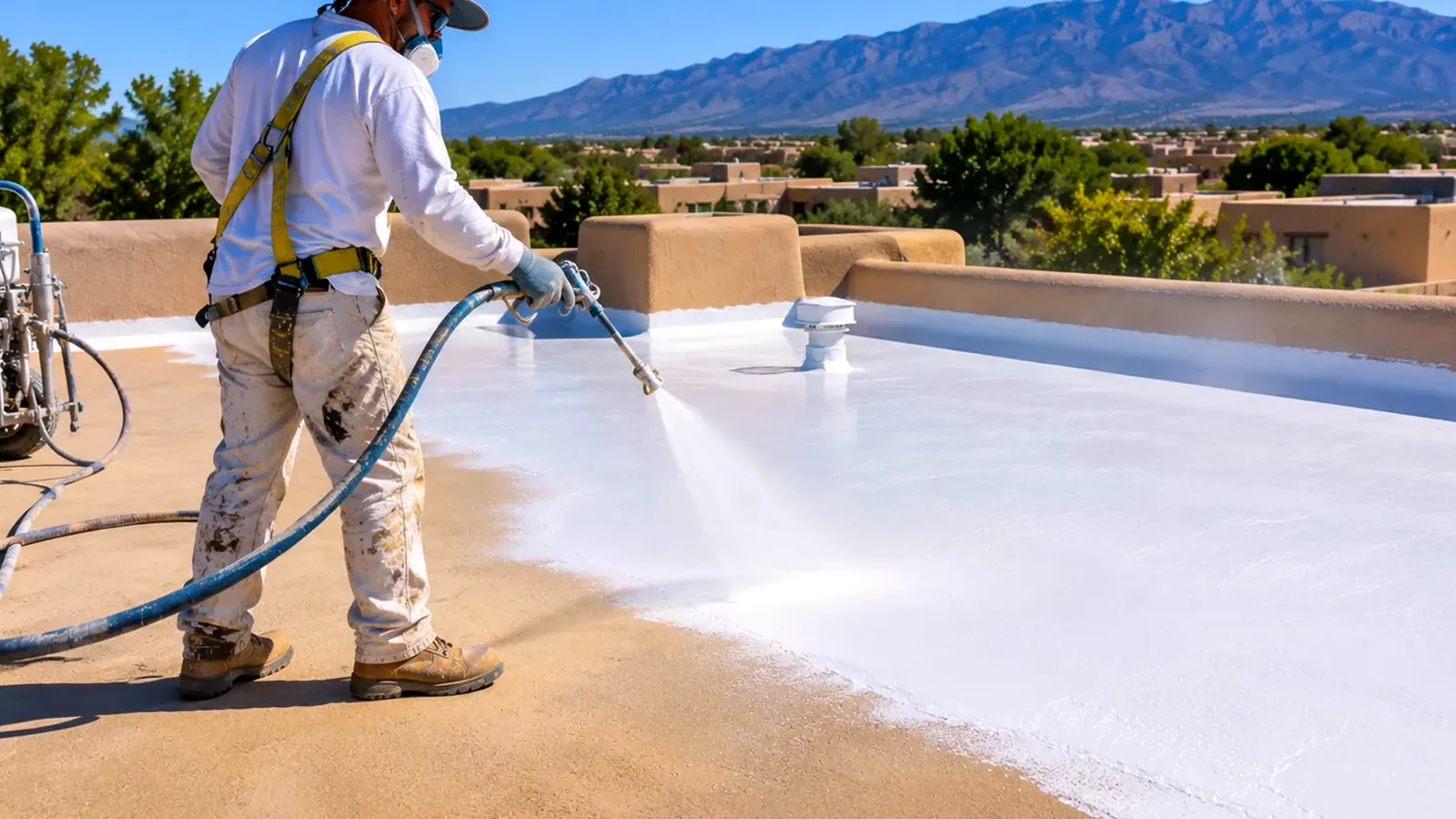
- Recoat: if the foam is sound, wash, repair and apply a full new coat. See flat roof recoating.
- Re-foam: if the foam is eroded but dry, a new layer of foam goes over the old, then a coating.
- Replace: if moisture runs through large areas, the wet foam is removed before anything new goes on.
Recoat on time
A recoat over sound foam costs a fraction of re-foaming. Waiting until the foam is exposed for several seasons often doubles the bill. See how long flat roofs last.
Call us for a free look at your roof. You get photos of what we find and written pricing before any work starts.
Common questions
How long does a foam roof last?
The foam can last decades if the coating is maintained. Coatings typically need renewal every several years in Albuquerque's sun.
Is exposed foam an emergency?
Not usually overnight, but it degrades quickly. Get it coated before the next summer or monsoon season.
Do birds really damage foam?
Yes. Birds peck at exposed or soft foam. A sound coating usually stops it.